As the current school year begins to wind down, forward-thinking school leaders are already looking ahead to the next. One of the most critical components of a successful start to any school year is back-to-school in-service training—and the time to plan that training is not July or August… it is now.
Early Planning Equals Better Outcomes
Districts that wait until the last minute to schedule in-service training often find themselves limited in both availability and quality. The best presenters, the most relevant topics, and the most impactful programs are scheduled months in advance. Early planning allows districts to:
- Secure high-quality, specialized instructors
- Align training with current risks and emerging trends
- Customize content to meet district-specific needs
- Maximize professional development time and budgets
Simply put, proactive planning leads to proactive preparedness.
The Limitations of In-House Training
There is no question that in-house trainers play an important role in professional development. They understand district culture, policies, and day-to-day operations. However, relying solely on internal personnel creates several inherent limitations:
- Familiarity breeds complacency – critical issues may be overlooked because “that’s how we’ve always done it.”
- Limited scope of expertise – internal staff may not have specialized knowledge in areas such as threat recognition, crisis response, or emerging risks.
- Lack of outside perspective – blind spots are common when the same individuals assess and train within the same environment year after year.
The most effective districts recognize that in-house training should be complemented—not replaced—by external expertise.
Why External Professionals Matter
Bringing in qualified, experienced outside professionals provides a level of depth, objectivity, and credibility that cannot be replicated internally. External experts:
- Offer unbiased assessments and instruction
- Bring real-world experience across multiple districts and environments
- Introduce current best practices, not outdated habits
- Challenge assumptions and identify overlooked vulnerabilities
This is especially critical when addressing safety and security, where the cost of missed gaps can be catastrophic.
Safety and Security Must Be a Priority—Not an Afterthought
Today’s school environment demands that safety and security training move to the forefront of in-service planning. Schools are no longer just places of education—they are environments that must be prepared for a wide range of risks, including:
- Violence and active threats
- De-escalation and behavioral intervention
- Transportation-related incidents and bus safety
- Medical emergencies and trauma response
- Terrorism awareness and suspicious activity recognition
- Crisis decision-making and communication
These are not “optional” topics—they are mission-critical responsibilities.
The Value of Specialized Training Providers
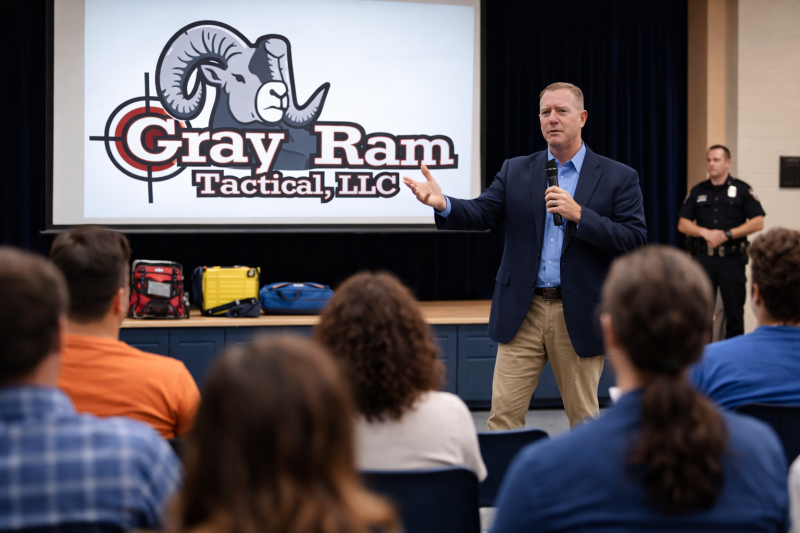
Organizations like Gray Ram Tactical, LLC bring nearly two decades of experience working with schools, transportation systems, and organizations across the United States and internationally. Their programs are designed specifically for real-world application, not theoretical discussion.
By incorporating professional training providers, districts gain:
- Practical, actionable strategies that staff can immediately implement
- Engaging instruction that resonates with all personnel—from administrators to bus drivers
- Consistency in messaging and expectations across the district
- Confidence that training is aligned with current threats and best practices
Additionally, programs such as monthly ongoing training opportunities ensure that learning is continuous—not confined to a single in-service day.
Moving Forward
The question for school leaders is not whether training will occur—it is how effective that training will be.
Will it be routine and repetitive?
Or will it be intentional, relevant, and impactful?
Planning now allows districts to build a training program that:
- Blends internal knowledge with external expertise
- Prioritizes safety and security alongside academic readiness
- Prepares staff not just for the expected—but for the unexpected
Final Thought
Your staff deserves more than a check-the-box training day.
Your students deserve more than minimal compliance.
They deserve preparation that truly makes a difference.
Now is the time to act.
Add comment
Comments