Public Transportation Is a Classroom Too: Preparing Students to Travel Safely to School
Every day, millions of students around the world travel to and from school using some form of public transportation. While the iconic yellow school bus remains the gold standard for pupil transportation in the United States, many students—especially those in urban areas and throughout the world—rely on city buses, commuter trains, subways, ferries, and other forms of public transit to access their education. (School Transportation News)
As I have written throughout my Pupil Transportation Around the World series for School Transportation News, one lesson has become increasingly clear regardless of the country: transportation safety is about much more than the vehicle. It is about preparing students to make good decisions before, during, and after every trip. (School Transportation News)
Safety Begins Before the First Ride
Many school districts spend significant time training school bus drivers, transportation supervisors, and staff members. Those investments are critical. However, students who ride public transportation often receive little or no formal instruction on how to safely navigate the unique challenges associated with public transit.
Knowing which bus to board is only one small part of traveling safely.
Students should understand how to:
-
Plan their route before leaving home.
-
Identify trusted transit employees.
-
Recognize suspicious or concerning behavior.
-
Protect personal belongings.
-
Respond if they become lost.
-
Report emergencies.
-
Stay aware of their surroundings instead of becoming distracted by phones or headphones.
-
Know what to do if someone makes them feel uncomfortable or unsafe.
These are life skills that can help protect them not only during the school commute but throughout adulthood.
Public Transportation Presents Different Risks
Unlike dedicated school buses, public transit systems carry riders from every background and destination. Students may share space with commuters, tourists, individuals experiencing mental health crises, or people exhibiting inappropriate or criminal behavior.
That reality does not mean public transportation is inherently unsafe. It simply means students need different training and greater situational awareness.
Parents and schools should have open conversations with children about what to expect and should practice scenarios that help students respond confidently to unfamiliar situations. Role-playing common situations can help build confidence without creating unnecessary fear. (DiBella Law Injury and Accident Lawyers)
Situational Awareness Is One of the Greatest Safety Tools
Throughout my work with transportation professionals in multiple countries, I have consistently emphasized one principle:
The best way to survive a dangerous situation is to recognize it early enough to avoid it altogether.
Students should learn to:
-
Remain alert while waiting at transit stops.
-
Avoid isolated locations whenever possible.
-
Trust their instincts.
-
Stay in well-lit, populated areas.
-
Keep emergency contact information readily available.
-
Know when and how to seek assistance from transit personnel or law enforcement.
Teaching these habits develops confidence without encouraging fear.
Every Country Offers Valuable Lessons
One of the most rewarding aspects of studying pupil transportation systems around the world is discovering that every nation has strengths worth learning from.
Some countries excel at integrating public transit into daily student life. Others emphasize driver professionalism, infrastructure, or community responsibility. In the United States, the yellow school bus remains one of the safest forms of transportation ever developed for children, while many other countries rely heavily on public transportation because of geography, population density, or available resources. (School Transportation News)
Rather than asking which system is "best," we should continually ask:
What can we learn from one another to improve student safety?
Schools Have an Opportunity to Lead
Student transportation safety education should not be limited to school bus evacuation drills.
Districts can work with local transit agencies, school resource officers, transportation departments, and safety professionals to provide age-appropriate instruction before students begin riding public transportation independently.
Topics might include:
-
Personal safety and situational awareness.
-
Emergency communication.
-
Transit etiquette and expectations.
-
Stranger awareness.
-
Digital safety while traveling.
-
Weather preparedness.
-
Safe walking routes to and from transit stops.
-
Emergency response procedures.
These lessons require only a small investment of time but can have a lasting impact.
Preparing Students for Life
Transportation is often the first opportunity many young people have to exercise independence.
By providing students with practical safety education before they begin riding public transportation alone, schools are not simply teaching them how to get to class—they are teaching lifelong decision-making skills that can help protect them wherever life takes them.
Student safety begins long before the classroom door opens.
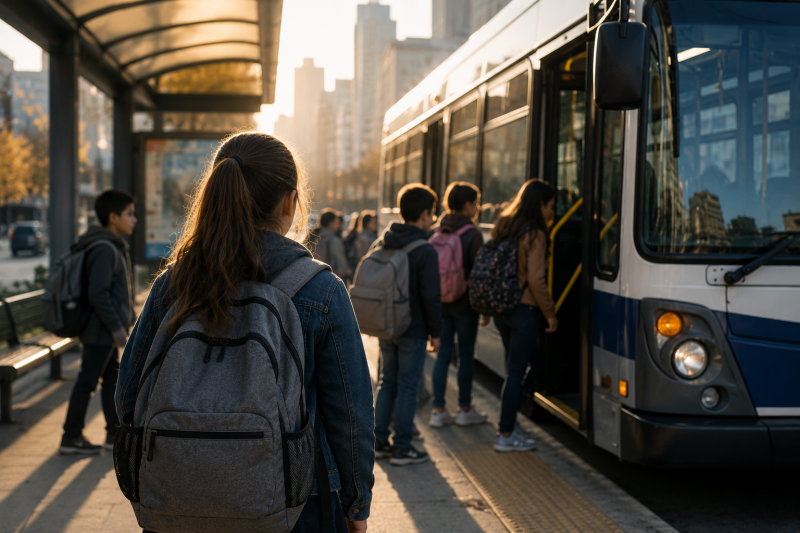
Sometimes, it begins at the bus stop.
Additional Resource
Parents and educators looking for practical guidance on helping children safely use public transportation may find this resource helpful:
Safety Tips for Your Kids Who Need To Use Public Transportation
It provides age-appropriate recommendations for discussing public transportation safety, emergency preparedness, and transit etiquette with children. (DiBella Law Injury and Accident Lawyers)
Add comment
Comments