Your Employees Are Part of Your Security System—Have You Trained Them?
Organizations spend thousands—and sometimes millions—of dollars on security. Cameras, access-control systems, electronic locks, alarms, lighting, fencing, and other technology can all play an important role in protecting people and property.
But one of the most important components of any security program walks through the front door every morning: your employees.
Technology can detect, record, restrict, and alert. People must still recognize what is happening, make decisions, communicate information, and take action.
That makes employees an essential part of an organization’s security system.
Your Employees See What Technology Doesn’t
Employees know their workplace.
They know who normally enters the building. They recognize coworkers, vendors, customers, parents, contractors, patients, students, and visitors. They understand normal routines and often notice when something simply doesn’t look right.
An employee may notice someone repeatedly testing a locked door. A receptionist may recognize unusual questions about building access. A supervisor may observe significant changes in an employee’s behavior. A maintenance employee may discover a door that is routinely being propped open. Someone in the parking lot may notice a person watching employees enter and leave the building.
Each observation may seem insignificant by itself. Combined with other information, however, it can provide an early warning of a developing security problem.
The challenge is whether employees recognize the significance of what they are seeing—and whether they know what to do with that information.
“See Something, Say Something” Isn’t Enough
Organizations frequently tell employees to report suspicious behavior. That’s a good start, but employees need more than a slogan.
What constitutes suspicious behavior? Who should they contact? What information should they provide? When should they call 911? What should they do if the concern involves another employee? What happens after they make a report?
If those questions haven’t been answered before an incident occurs, employees may hesitate when seconds matter.
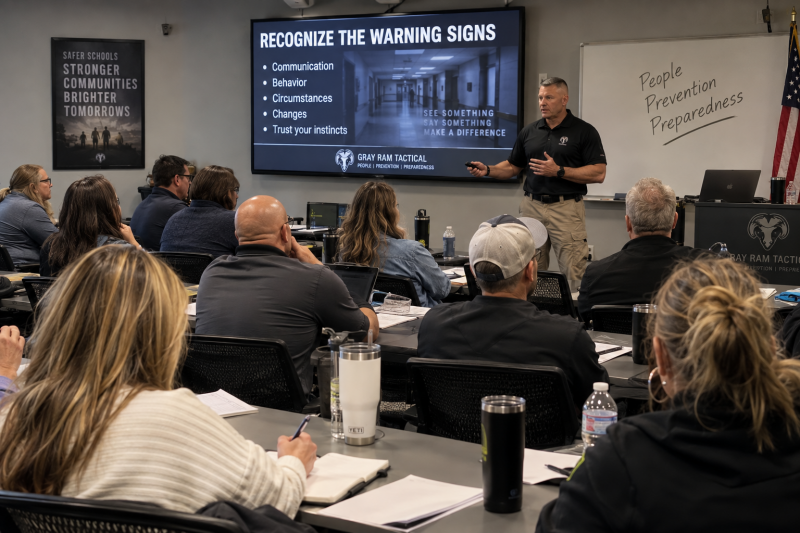
Effective security training establishes expectations before an emergency. Employees should understand how to recognize potential threats, communicate concerns, respond appropriately, and protect themselves and others.
Security Training Should Start Before the Emergency
Too often, workplace security training focuses almost exclusively on what employees should do once violence begins.
Emergency response training is important, but a comprehensive security program should begin much earlier.
Employees can be trained to recognize indicators associated with escalating behavior, workplace violence concerns, unauthorized access, surveillance, suspicious activity, concealed weapons, interpersonal conflict, and other potential threats.
They should also understand basic security practices such as maintaining access control, protecting sensitive information, challenging or reporting unauthorized individuals when appropriate, and avoiding behaviors that unintentionally defeat existing security measures.
A sophisticated electronic access-control system provides little protection when employees routinely prop open secured doors.
A high-definition camera system may document an incident perfectly while doing nothing to prevent it.
Security becomes significantly stronger when technology, procedures, and trained people work together.
Employees Need Permission to Act
One of the most overlooked aspects of workplace security is organizational culture.
Employees sometimes recognize something concerning but fail to report it because they don’t want to overreact, embarrass themselves, create conflict, or accuse someone unfairly.
Organizations should create an environment where employees understand that reporting a legitimate concern is responsible behavior.
That does not mean encouraging paranoia or treating every unusual behavior as a threat. It means teaching employees how to identify observable behaviors and circumstances that warrant additional attention and giving them a clear process for communicating those concerns.
The objective isn’t to turn employees into security officers.
The objective is to make them informed participants in organizational security.
Training Must Be Practical
Security training should reflect the actual workplace.
A hospital has different risks than a school. A manufacturing facility has different concerns than a corporate office. A hotel, house of worship, transportation operation, government building, and small business each presents unique challenges.
Training should therefore consider the organization’s physical environment, workforce, operations, clientele, hours of operation, emergency resources, and realistic threats.
Employees should leave training understanding what they may encounter in their workplace and what actions their organization expects them to take.
Scenario-based discussions and exercises can be particularly valuable because they force employees to think through decisions before they are confronted with them in real life.
Security Is a Shared Responsibility
Security cannot belong exclusively to the security department, administrators, law enforcement, or senior leadership.
Every employee has a role.
Leadership establishes expectations. Security professionals identify vulnerabilities and develop protective strategies. Technology provides additional layers of protection. Policies establish procedures. Employees provide thousands of additional opportunities every day to recognize problems before they become emergencies.
The strongest security programs integrate all of these components.
Organizations should ask themselves a simple question:
If one of our employees noticed something concerning today, would they recognize it, know who to tell, and understand what to do next?
If the answer isn’t an immediate yes, there may be an important gap in the organization’s security program.
Training Is an Investment in Prevention
The best security incident is the one that never occurs.
Organizations cannot eliminate every threat, and no training program can guarantee that violence, crime, or other emergencies will never happen. What organizations can do is improve their ability to recognize potential problems earlier, make informed decisions, and respond more effectively when something does occur.
That begins with recognizing that employees aren’t simply people who happen to work inside a secured facility.
They are part of the security system itself.
For nearly 20 years, Gray Ram Tactical, LLC has provided independent security consulting, assessments, and training to organizations in the United States and internationally. Our work focuses on identifying vulnerabilities, developing practical solutions, and helping organizations better prepare their people to prevent, respond to, and recover from security incidents.
Security isn’t just something you install. It’s something you build. And your people are one of its most important layers.
Add comment
Comments